Unpaid invoices
Each on its due date, moved by how late that customer usually pays.
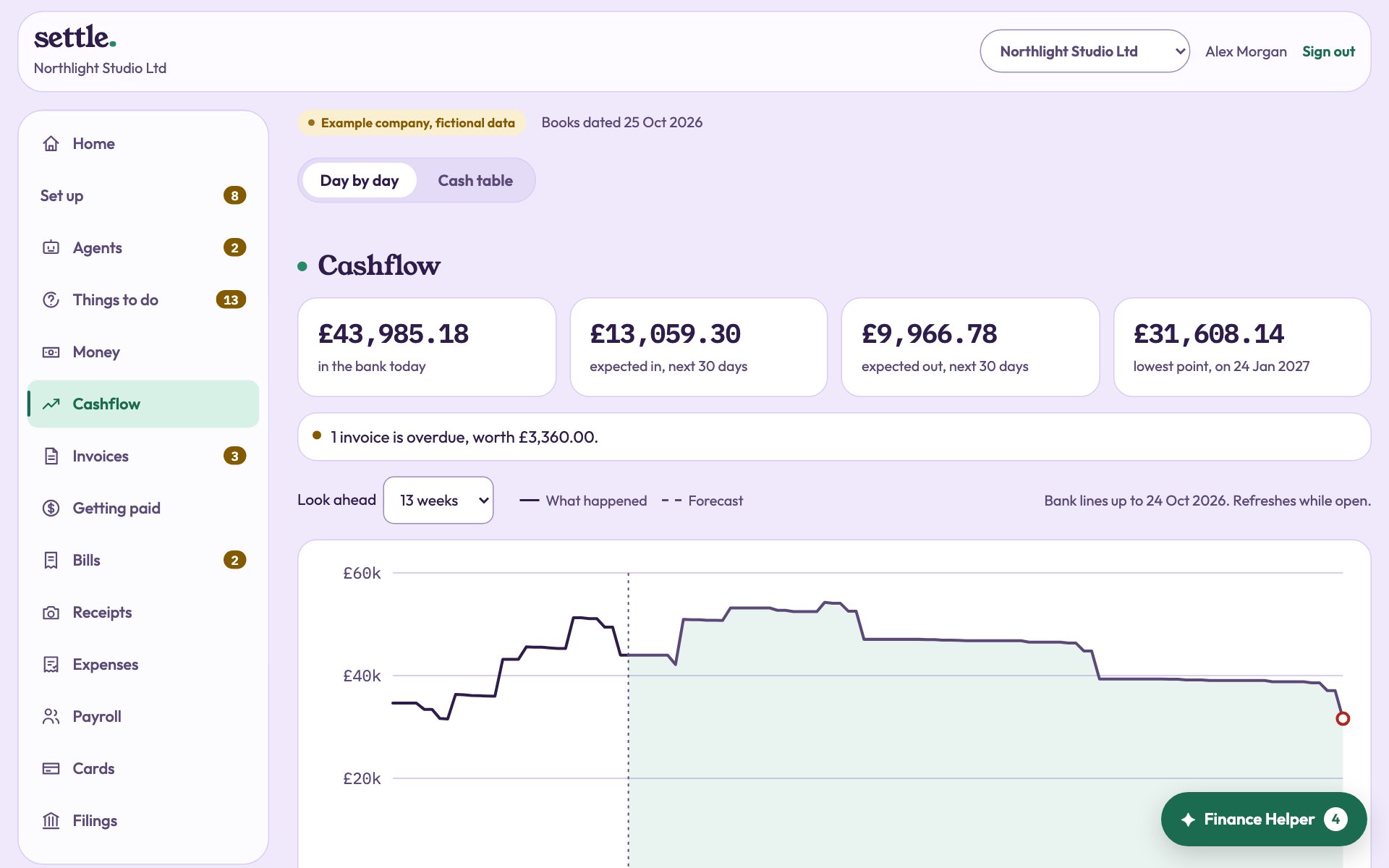
Cashflow
Because software and AI keep your books every day, your forecast is always current: one day at a time, for up to a year, and your accountant sees the same figures you do.

What feeds it
Each on its due date, moved by how late that customer usually pays.
On the due date, or the date you chose to pay.
Anything seen in the bank three months running is projected forward.
Net pay on pay day, and what goes to HMRC and the pension after.
What is owed so far, on the date it falls due.
Every repayment, from a schedule worked out for you.
Each one still to be raised, landing when it will be paid.
A new hire, a deposit, a big order. Once or repeating.
Cash table
Every category down the side and every month across: what went through the bank in the months gone by, and the forecast for the months ahead, with the opening and closing balance for each.
Click any figure to see the payments behind it. Click a month ahead and type your own figure, for one month or the next few; it replaces what was worked out, everywhere the forecast is shown.
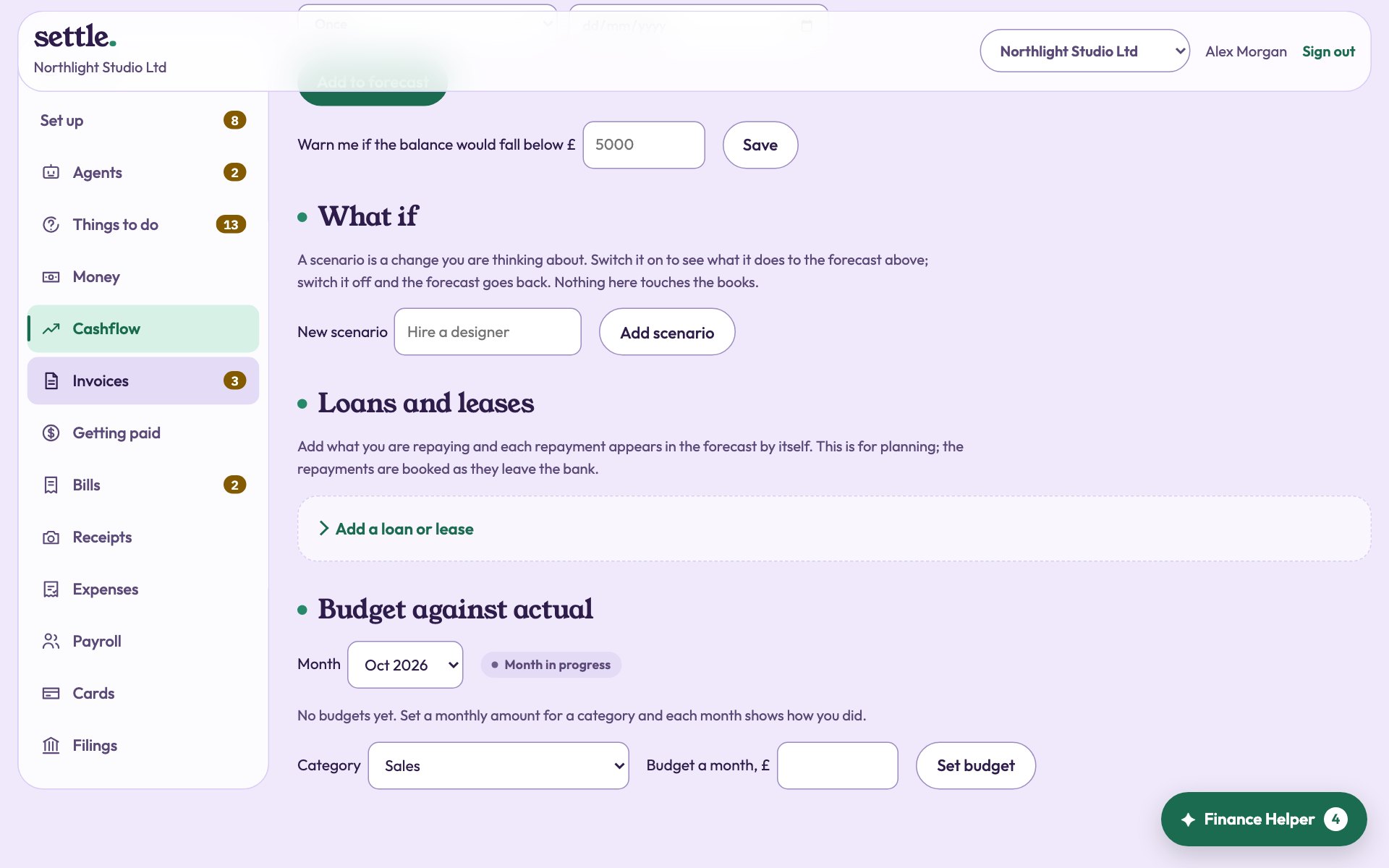
What if
Name a scenario, such as “Hire a designer” or “Lose Kite and Co”, and attach the changes it would bring. Switch it on and the forecast shows both lines of thinking: where you end up with it, and without.
If a scenario would run the money out, it says so, with the date.
Budgets
Set a monthly amount for any cost or income category.
See the difference for any month, with a clear over, close or within.
Income is judged against how far through the month you are.
Warnings
Bank feeds are being switched on. Until then the forecast is current to the last statement you imported. Balances are in pounds only.
Working capital
When the forecast shows the money running short, Evenly already tells you the date. Working capital will go one step further: how much would carry you through and for how long, worked out from the same figures, and an application to a lender with your books, VAT and payroll already attached, so there is nothing to gather.
The amount and dates of a gap are shown on the Cashflow screen today. The funding itself is not available yet, and nothing here is an offer of credit.
We are choosing a lending partner. The lender will decide, and set its own rates and terms; we will show them in full before you apply.
Add a bank statement and the forecast is there, with your accountant looking at the same figures.